
Why are auto shops phasing out old lever-style tire changers in favor of 24-inch fully automatic models?
Modern Tires Are Becoming Harder to Handle
Modern passenger vehicles increasingly use:
- Low-profile tires
- Wider tire widths
- Larger alloy wheels
- TPMS systems
- Run-flat tire structures
Common tire sizes such as 225/45R17 and 235/40R18 place much higher demands on tire changing equipment than older tire designs.
Traditional lever-style tire changers often rely on excessive physical force and manual pry-bar operation. When handling tight tire beads, technicians may accidentally:
- Scratch alloy wheels
- Damage wheel lips
- Break TPMS valves
- Deform tire beads
- Reduce tire sealing performance
As wheel designs become more expensive and delicate, old tire changing methods are becoming increasingly unsuitable for modern workshops.
Why Low-Profile Tires Create More Stress During Tire Changing
Low-profile tires have:
- Shorter sidewalls
- Stronger bead tension
- Stiffer structures
- Reduced flexibility during mounting and removal
Compared with traditional high-profile tires, modern low-profile tires require more precise operating angles during dismounting.
Using excessive force with manual tire levers increases the risk of:
- Rim scratches
- Bead deformation
- Tire sidewall damage
- TPMS sensor failure
Modern tire shops are therefore moving toward fully automatic tire changers with assist arms and controlled bead handling systems.
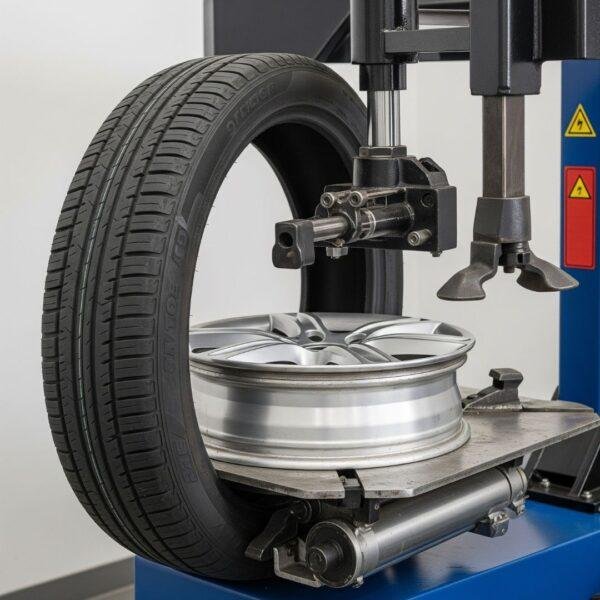
As modern vehicles continue to evolve, tire service equipment is changing just as quickly. In many professional tire shops, traditional lever-style tire changers are gradually being replaced by 24-inch fully automatic tire changers with assist arms.
The reason is simple: modern tires and wheels are no longer designed for outdated manual methods.
Modern Wheels Require Modern Tire Changing Equipment
Today’s passenger vehicles commonly use:
- Low-profile tires such as 225/45R17, 235/40R18, and 245/35R19
- Larger alloy wheels
- Thin wheel lips with painted or machined finishes
- TPMS (Tire Pressure Monitoring System) valves
- Run-flat and reinforced tire structures
Compared with older tire designs, these newer tire combinations have much tighter bead structures. The tire bead sits firmly against the rim, making manual dismounting increasingly difficult.
Traditional lever-style tire changers rely heavily on physical force and pry bars. In many workshops, technicians still use aggressive leverage to force the tire bead over the rim edge.
This creates several common problems:
- Scratched or damaged alloy wheels
- Bent wheel lips
- Broken TPMS valve stems
- Deformed tire beads
- Increased technician fatigue
- Higher risk of customer complaints
As wheel finishes become more expensive and customers pay closer attention to cosmetic damage, many shops can no longer accept the risks associated with older tire changing methods.
Why 24-Inch Fully Automatic Tire Changers Are Becoming Standard
Modern 24-inch fully automatic tire changers are designed specifically for today’s wider tires and low-profile wheel combinations.
Unlike traditional lever-operated machines, fully automatic systems use controlled mechanical movement and optimized working angles to reduce excessive force during tire mounting and demounting.
Most professional models now include:
- Pneumatic tilt-back columns
- Helper assist arms
- Bead pressing systems
- Ergonomic working positions
- Rim protection devices
- Adjustable clamping systems for larger wheels
The biggest advantage is that the machine allows the tire bead to relax naturally during operation rather than forcing it into position with brute strength.
This controlled bead movement significantly reduces stress on:
- Alloy wheel edges
- Tire sidewalls
- Tire beads
- TPMS sensors and valves
For modern workshops, this is becoming essential rather than optional.
Assist Arms Reduce Damage on Low-Profile Tires
One of the most important upgrades on modern tire changers is the assist arm system.
Low-profile tires have stiffer sidewalls and tighter bead seating pressure. Without assistance, technicians often struggle to keep the bead in the drop center during mounting and removal.
Assist arms apply stable downward pressure exactly where needed, helping maintain proper tire positioning throughout the process.
This offers several benefits:
- Less physical effort
- Faster operation
- Reduced wheel damage
- Safer handling of expensive wheels
- Improved consistency between technicians
For shops servicing premium vehicles, SUVs, EVs, and performance cars, assist arms are now considered critical equipment.
Ergonomic Design Improves Technician EfficiencyAnother reason shops are upgrading equipment is operator fatigue.
Older manual tire changers often require awkward body positioning and excessive upper-body force. Over time, repetitive strain becomes a serious issue in high-volume tire service environments.
Fully automatic tire changers are designed with ergonomics in mind:
- Standing operation is more natural
- Controls are positioned for easier access
- Reduced lifting and pulling force
- More stable wheel positioning
- Smoother bead handling
This not only improves productivity but also helps reduce technician injury risk during daily operation.
Traditional Lever Tire Changer vs Fully Automatic Tire Changer
| Feature | Traditional Lever Tire Changer | 24-Inch Fully Automatic Tire Changer |
|---|---|---|
| Operation Method | Manual force | Automatic assisted operation |
| Risk of Rim Damage | High | Low |
| TPMS Protection | Limited | Better protection |
| Suitable Tire Types | Standard tires | Low-profile & run-flat tires |
| Technician Fatigue | High | Reduced |
| Efficiency | Lower | Higher |
| Ergonomics | Poor | Improved |
| Wheel Compatibility | Limited | Large wheel support |
Larger Wheels Are Driving Equipment Upgrades
Ten years ago, many passenger vehicles used 14-inch or 15-inch wheels.
Today, 17-inch, 18-inch, and 20-inch wheels are increasingly common, while electric vehicles and SUVs continue pushing wheel sizes even larger.
Many older tire changers simply cannot safely handle:
- Wide wheel widths
- Large wheel diameters
- Reinforced sidewalls
- Run-flat tires
- EV tire constructions
A 24-inch fully automatic tire changer gives shops the flexibility to service a much wider range of modern vehicles.
Customer Expectations Have Changed
Customers today are more sensitive to wheel condition than ever before.
A small scratch on a painted alloy wheel can easily turn into a costly complaint. Premium vehicle owners especially expect damage-free tire service.
Shops using modern tire changing equipment are better positioned to provide:
- Cleaner service
- Faster turnaround time
- Lower wheel damage rates
- More professional operation
- Better customer satisfaction
In competitive automotive service markets, equipment quality increasingly affects shop reputation.
The Industry Is Moving Toward Smarter Tire Service
The transition from old lever-style tire changers to fully automatic 24-inch models reflects a broader trend in the automotive service industry.
Modern tire service is no longer about brute force. It is about:
- Precision
- Wheel protection
- Technician safety
- Operational efficiency
- Compatibility with modern vehicles
As tire and wheel technology continues evolving, professional shops are investing in equipment that can safely handle the demands of newer vehicles while reducing labor intensity and minimizing service risks.
For many workshops, upgrading to a fully automatic tire changer is no longer just an equipment purchase — it is part of staying competitive in the modern tire service market.
Ergonomic Operation Improves Workshop Efficiency
Old lever-style tire changers often require awkward body positioning and heavy physical force.
Fully automatic tire changers are designed for standing ergonomic operation, helping technicians work more comfortably during long service hours.
This helps reduce:
- Back strain
- Arm fatigue
- Repetitive stress injuries
- Operator error caused by fatigue
Improved ergonomics also contribute to faster workflow and more consistent tire service quality.
Frequently Asked Questions
Why are old tire changers becoming outdated?
Modern low-profile tires and alloy wheels require more precise handling and lower operating force than traditional lever-style tire changers can provide.
What is the advantage of a fully automatic tire changer?
Fully automatic tire changers improve efficiency, reduce wheel damage risk, and make tire service easier for technicians.
Why are assist arms important?
Assist arms help control tire bead movement during mounting and removal, especially on low-profile and run-flat tires.
Can automatic tire changers reduce TPMS damage?
Yes. Controlled tire movement and reduced pry-force help lower the risk of damaging TPMS sensors and valves.
Are 24-inch tire changers necessary for modern workshops?
Many modern vehicles now use larger wheels and wider tires, making 24-inch tire changers increasingly important for professional shops.
Ready to Upgrade Your Shop's Efficiency?
Don't let outdated lever-style changers slow down your technicians or scratch your customers' high-end alloy rims. Explore our heavy-duty, 24-inch fully automatic tire changing solutions today.
Related Articles
How to Choose the Best Tire Removal Tool for Your Auto Shop: A Comprehensive Guide
